Cloud Computing Explained: Benefits, Types, and How It Works (2026 Guide)
Introduction
Cloud computing has transformed the way businesses build, manage, and scale their digital operations. Instead of investing in expensive servers and IT infrastructure, organizations can access computing resources such as storage, databases, networking, and software over the internet whenever they need them.
From startups to large enterprises, cloud technology enables businesses to reduce costs, improve flexibility, and accelerate innovation. Whether you're hosting a website, running enterprise software, or developing AI-powered applications, cloud computing plays a crucial role in modern business success.
This guide explains how cloud computing works, its deployment models, service types, benefits, and why it remains essential for businesses in 2026.
What Is Cloud Computing?
Cloud computing is the delivery of computing services over the internet instead of relying on local servers or personal computers. Businesses can access storage, virtual machines, databases, networking, security tools, and software on demand without managing physical hardware.
Cloud providers handle infrastructure maintenance, updates, and security, allowing organizations to focus on innovation and business growth.
How Cloud Computing Works
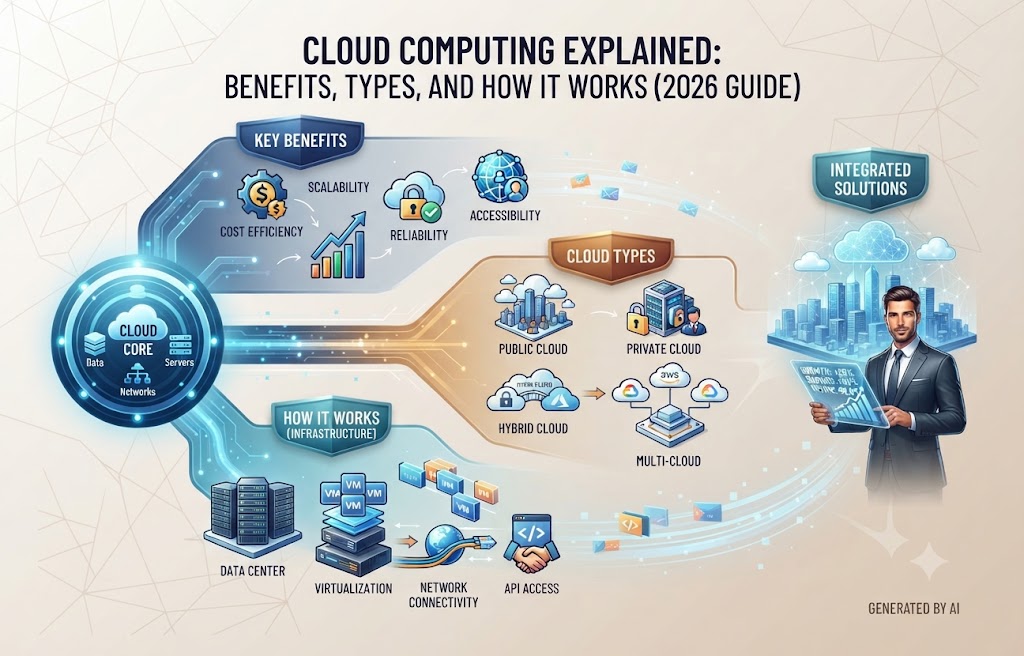
Cloud computing operates through global data centers connected by high-speed networks. When users access cloud-based applications or store data online, requests are processed by remote servers instead of local devices.
Virtualization technology allows multiple users to securely share computing resources while maintaining privacy and performance. Since cloud services follow a pay-as-you-go model, businesses only pay for the resources they use, making cloud computing highly flexible and cost-effective.
Cloud Deployment Models
Businesses can choose different deployment models based on their security and operational requirements.
Public Cloud
A public cloud is managed by third-party providers and offers affordable, scalable resources over the internet. It is ideal for startups and growing businesses.
Private Cloud
A private cloud is dedicated to a single organization, providing greater security, customization, and control for businesses handling sensitive data.
Hybrid Cloud
Hybrid cloud combines public and private environments, allowing organizations to keep confidential data private while using public cloud resources for less critical workloads.
Multi-Cloud
Many businesses use multiple cloud providers to improve reliability, avoid vendor lock-in, and optimize application performance.
Cloud Service Models
Cloud services are mainly divided into three categories:
Infrastructure as a Service (IaaS)
Provides virtual servers, storage, and networking resources without requiring businesses to own physical infrastructure.
Platform as a Service (PaaS)
Offers a complete development environment where developers can build, test, and deploy applications without managing servers.
Software as a Service (SaaS)
Delivers software directly through a web browser. Popular SaaS solutions include CRM systems, ERP software, HRMS platforms, accounting tools, and collaboration applications.
Benefits of Cloud Computing
Cloud computing provides several advantages that support business growth:
-
Lower IT infrastructure costs
-
Easy scalability
-
High availability and reliability
-
Advanced security features
-
Remote accessibility
-
Automatic software updates
-
Faster deployment
-
Improved collaboration
-
Better disaster recovery
These benefits allow businesses to become more agile while reducing operational expenses.
Business Applications of Cloud Computing
Cloud technology supports organizations across almost every industry. Common applications include:
-
Website hosting
-
Business email services
-
Customer Relationship Management (CRM)
-
Enterprise Resource Planning (ERP)
-
Human Resource Management Systems (HRMS)
-
Accounting software
-
Data backup and disaster recovery
-
AI and Machine Learning
-
Business Intelligence dashboards
-
Video conferencing and collaboration tools
Cloud computing enables businesses to work efficiently while supporting remote teams and digital transformation.
Cloud vs Traditional Infrastructure
Traditional IT systems require organizations to purchase, maintain, and upgrade physical servers, often involving significant costs and maintenance.
Cloud computing eliminates these challenges by offering on-demand infrastructure that scales instantly. Businesses benefit from lower costs, faster deployment, easier maintenance, and greater flexibility without managing physical hardware.
Cloud Computing Trends in 2026
Cloud technology continues to evolve rapidly. Some of the biggest trends include:
-
AI-powered cloud management
-
Serverless computing
-
Edge computing
-
Cloud-native application development
-
Multi-cloud strategies
-
Intelligent automation
-
Advanced cloud security
-
Predictive monitoring
-
Green cloud infrastructure
-
Cloud-based analytics
These innovations help businesses improve efficiency while supporting future digital growth.
Best Practices for Cloud Adoption
To maximize cloud performance and security, businesses should:
-
Evaluate existing infrastructure
-
Choose the right cloud model
-
Encrypt sensitive data
-
Enable multi-factor authentication
-
Monitor cloud performance
-
Perform regular backups
-
Optimize cloud spending
-
Train employees on cloud security
-
Integrate cloud services with existing systems
Following these best practices ensures secure and successful cloud adoption.
Why Choose Coding Rig?
At Coding Rig, we help businesses leverage cloud computing to build secure, scalable, and high-performance digital solutions. Our cloud services include cloud migration, SaaS application development, cloud-native software, infrastructure optimization, API integration, cloud security, backup solutions, and managed cloud support.
Whether you're migrating an existing application or building a cloud-based platform from scratch, our team delivers customized cloud solutions that improve collaboration, reduce operational costs, and support long-term business growth.
Conclusion
Cloud computing has become the backbone of modern digital transformation. By offering scalable infrastructure, stronger security, lower costs, and greater flexibility, it enables businesses to innovate faster and operate more efficiently.
As cloud technology continues to evolve in 2026, organizations that embrace cloud solutions will be better prepared to adapt to changing market demands, improve customer experiences, and achieve sustainable growth. Investing in cloud computing today is a strategic step toward building a future-ready business.