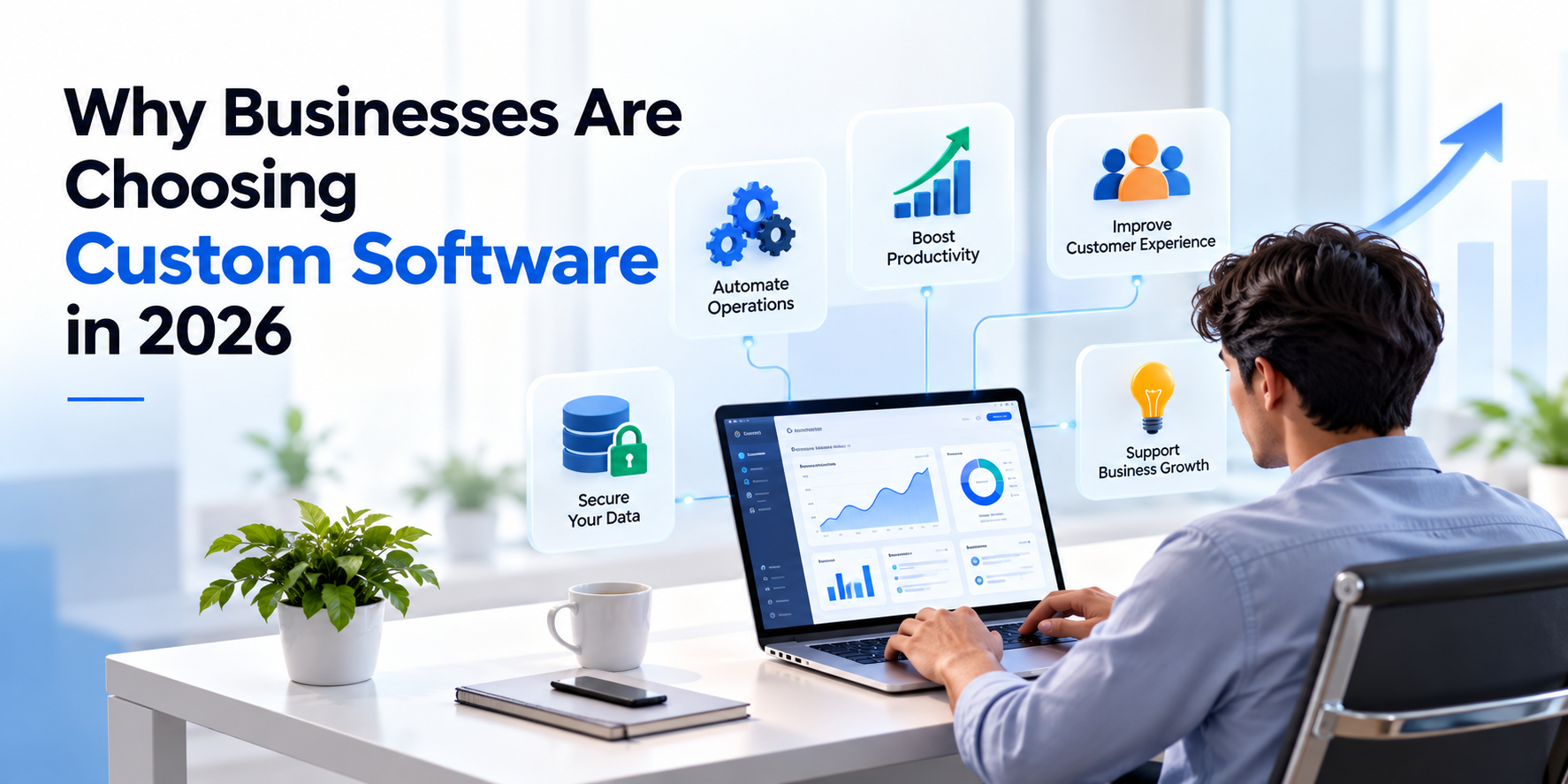
Why Businesses Are Choosing Custom Software in 2026
In 2026, businesses are moving towards smarter digital solutions to improve productivity, reduce operational costs, and stay competitive. Technology is no longer just a supporting tool; it has become an essential part of business growth.
However, many organizations still struggle with outdated systems, manual processes, and ready-made software that cannot meet their specific requirements. These challenges often lead to wasted time, reduced efficiency, and unnecessary expenses.
This is where custom software development becomes valuable. By creating applications designed around specific business needs, companies can automate operations, improve customer experiences, and build more efficient workflows.
What Is Custom Software Development?
Custom software development is the process of designing, developing, and maintaining software applications according to an organization's unique requirements.
Unlike ready-made software, which offers standard features for different businesses, customized solutions focus on specific operational challenges.
For example, a retail business may require inventory management software, while a logistics company may need fleet tracking and delivery management systems.
Custom applications allow businesses to select essential features, integrate existing tools, and develop systems that support their long-term objectives.
Why Businesses Are Investing in Custom Software in 2026
1. Automating Daily Business Operations
Manual processes can consume significant time and increase the possibility of errors.
Custom business automation software helps organizations automate repetitive activities such as invoice generation, employee attendance, inventory updates, customer follow-ups, and financial reporting.
By reducing manual workloads, employees can concentrate on customer service, business development, and other important responsibilities.
Automation also helps maintain consistency across daily operations.
2. Improving Productivity and Efficiency
Businesses often depend on multiple applications for managing customers, employees, sales, and inventory.
Switching between disconnected platforms can create confusion and slow down productivity.
Custom software can combine essential business functions into one centralized system, allowing employees to access information and complete tasks efficiently.
This improves communication between departments and supports faster decision-making.
3. Supporting Business Growth and Scalability
As companies expand, their operational requirements become more complex.
Ready-made software may introduce limitations related to users, features, storage, or integrations.
Custom software solutions can be designed with scalability in mind, allowing organizations to introduce additional functionality as their business grows.
This flexibility helps companies adapt to changing requirements without replacing their entire digital infrastructure.
4. Enhancing Customer Experience
Customer satisfaction plays an important role in business success.
Custom CRM software helps organizations manage customer information, track leads, monitor interactions, and improve communication.
Businesses can also integrate automated notifications, customer portals, appointment scheduling, and support systems.
These features create more convenient customer experiences while helping companies build stronger relationships.
5. Improving Data Management and Security
Every business generates valuable information through daily activities.
Managing this data across spreadsheets and disconnected applications can make reporting difficult.
Custom software can provide centralized dashboards, detailed analytics, and organized databases.
Businesses can also implement role-based permissions, authentication, encryption, and other security measures according to their requirements.
However, effective security depends on proper implementation, regular maintenance, and responsible data management.
6. Creating Long-Term Business Value
Ready-made applications often involve recurring subscriptions and additional charges for advanced functionality.
Custom software generally requires a higher initial investment, but it may reduce inefficiencies and provide better control over future development.
Businesses can prioritize essential features and introduce additional capabilities when required.
Evaluating development expenses, maintenance costs, and expected productivity improvements helps determine whether customization is financially beneficial.
How Artificial Intelligence Is Transforming Custom Software
Artificial intelligence is becoming an important consideration in modern software development.
Businesses can integrate AI-powered functionality into customized applications to improve automation, analyze information, and support decision-making.
Some popular AI applications include:
-
Intelligent customer support assistants
-
Automated document processing
-
Predictive sales analysis
-
Personalized customer recommendations
-
Advanced business reporting
-
Smart workflow automation
For example, an AI-enabled CRM system can help sales teams identify promising leads, organize customer information, and automate routine follow-ups.
However, successful AI implementation requires reliable information, clear objectives, and appropriate human oversight.
Custom Software vs Ready-Made Software
Choosing between custom and ready-made software depends on an organization's requirements, budget, and operational complexity.
Ready-made software is generally suitable for businesses that need standard functionality and quick implementation.
Custom software provides greater flexibility, personalized features, and integration capabilities.
For organizations with specialized workflows, customized applications may offer better long-term value.
Businesses should carefully evaluate both options before making an investment.
Industries Benefiting From Custom Software Development
Customized software supports organizations across different industries.
Healthcare: Appointment scheduling, patient administration, and communication systems.
Retail and Ecommerce: Inventory tracking, billing, order processing, and customer management.
Education: Student information systems, attendance tracking, and learning platforms.
Logistics: Fleet management, shipment tracking, and delivery coordination.
Real Estate: Property listings, lead management, and customer relationship systems.
Professional Services: Project management, invoicing, employee management, and reporting.
Each industry has unique requirements that purpose-built applications can address.
Why Choose Coding Rig for Custom Software Development?
Choosing the right technology partner is essential for developing reliable business applications.
At Coding Rig, we create customized digital solutions designed around business requirements and operational goals.
Our development services include:
-
Custom Software Development
-
Website Design and Development
-
Mobile Application Development
-
CRM and ERP Software Solutions
-
Ecommerce Development
-
Business Automation Solutions
We focus on understanding business challenges, creating user-friendly interfaces, and developing scalable applications that support efficiency.
Whether your organization needs a customized CRM system, inventory management platform, or complete business automation solution, Coding Rig can help transform your ideas into practical digital products.
Conclusion
In 2026, custom software development offers businesses an opportunity to improve efficiency, simplify operations, and prepare for future growth.
From automation and customer management to analytics and scalable systems, customized applications can address challenges that standard software may not solve effectively.
The right investment depends on choosing technology that supports genuine business needs.
Ready to Transform Your Business With Custom Software?
Connect with Coding Rig to discuss your requirements and explore customized software solutions.
Website: https://codingrig.com/