Fast, Secure & Scalable Website Development: 2026 Guide
A website is no longer just an online presence. For modern businesses, it can serve as a sales channel, customer service platform, marketing tool, booking system, or complete digital storefront. However, a website that loads slowly, lacks security, or cannot handle increasing traffic can negatively affect user experience and business growth.
That is why fast, secure, and scalable website development has become a priority for businesses in 2026. Building a successful website requires the right combination of performance optimization, security, responsive design, reliable infrastructure, and a technology architecture that can grow with the business.
What Is Fast, Secure, and Scalable Website Development?
Fast website development focuses on reducing loading times and delivering a smooth browsing experience. Secure development protects the website, business data, and users from common cyber threats.
Scalable development ensures that the website can support increasing traffic, content, transactions, and functionality without requiring a complete rebuild.
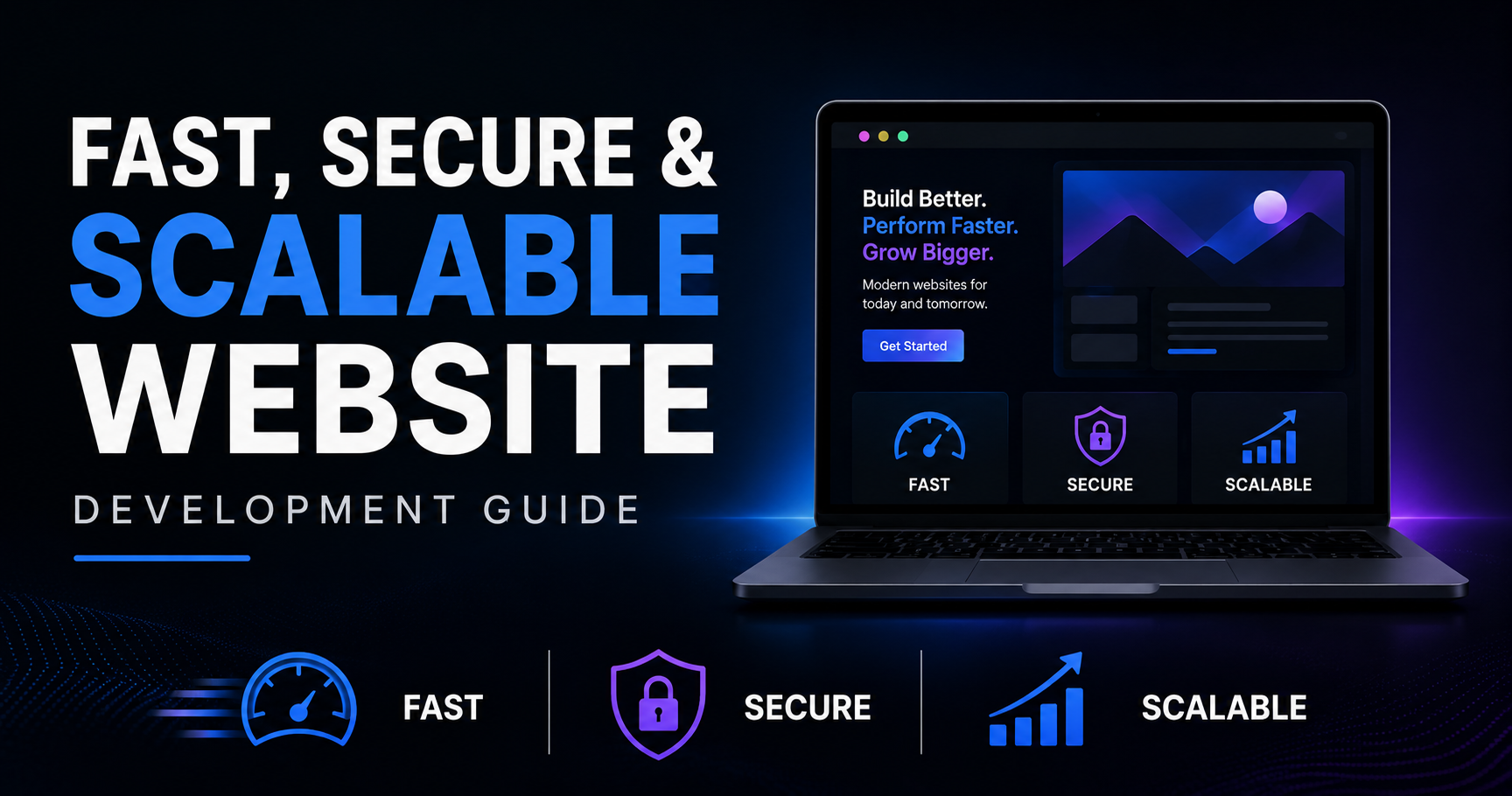
Together, these three elements create a website that is:
- Fast and responsive
- Secure and reliable
- Mobile-friendly
- Easy to maintain
- Ready for business growth
- Better equipped to handle increased traffic
Why Website Speed Matters
Website speed has a direct impact on user experience. Visitors are less likely to continue browsing when pages take too long to load.
A fast website can help businesses:
- Improve user experience
- Reduce bounce rates
- Increase engagement
- Support better conversions
- Improve mobile usability
- Strengthen search visibility
Several factors can affect website performance, including large images, unnecessary scripts, inefficient code, slow servers, excessive plugins, and poorly optimized databases.
Developers can improve performance through image optimization, caching, code optimization, content delivery networks, efficient APIs, and suitable hosting infrastructure.
Building a Secure Website
Security should be considered from the beginning of the development process rather than added after a website is completed.
A secure website can help protect customer information, business data, login credentials, and transactions.
Important security practices include:
- HTTPS and SSL configuration
- Secure authentication
- Strong password protection
- Input validation
- Secure API development
- Regular software updates
- Access control
- Data encryption
- Security monitoring
- Regular backups
Businesses handling payments, customer accounts, or sensitive information should give security even greater priority.
What Makes a Website Scalable?
Scalability refers to a website's ability to handle growth without experiencing major performance or reliability problems.
Imagine a website initially serving 1,000 visitors per month. If marketing campaigns or business expansion increase traffic to 100,000 visitors, the underlying architecture needs to support that growth.
A scalable website may use:
- Cloud infrastructure
- Load balancing
- Efficient databases
- Caching systems
- Modular architecture
- Optimized APIs
- Content delivery networks
- Scalable storage solutions
Scalability should be considered during the planning stage because changing the architecture after a website has grown significantly can be more expensive and complicated.
Responsive Design for Every Device
A significant portion of website traffic comes from smartphones and tablets. Therefore, responsive design is essential for modern websites.
A responsive website automatically adapts its layout to different screen sizes. Navigation, images, buttons, forms, and content should remain easy to use whether visitors are using a desktop, tablet, or smartphone.
Mobile-friendly design also contributes to a better overall user experience and supports businesses targeting customers across different devices.
Choosing the Right Technology
The technology stack can influence a website's performance, security, scalability, and maintenance requirements.
Depending on the project, developers may use different frontend frameworks, backend technologies, databases, APIs, cloud platforms, and content management systems.
The right choice depends on:
- Website functionality
- Expected traffic
- Business requirements
- Budget
- Security needs
- Integration requirements
- Future growth
There is no single technology that is ideal for every website. A professional development team should select technologies based on the specific project rather than simply following trends.
SEO and Website Performance
Website performance and technical quality are also important considerations for SEO. Search engines aim to provide users with useful and accessible experiences, making factors such as mobile usability, page experience, and site performance important parts of a strong technical foundation.
Developers should pay attention to:
- Page loading performance
- Mobile responsiveness
- Clean website architecture
- Crawlability
- Structured data
- Image optimization
- Internal linking
- Secure connections
SEO should be considered during development instead of being treated as a separate task after the website is launched.
How to Develop a Fast and Secure Website
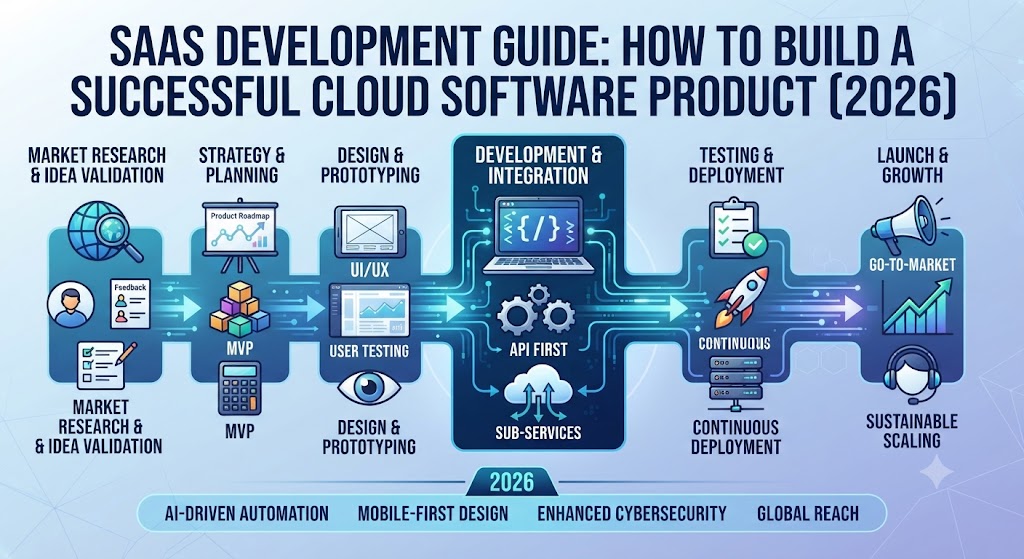
A successful development process typically starts with requirement analysis and planning. Developers then create the website architecture, design the user experience, develop the required functionality, integrate APIs, and perform extensive testing.
A practical process includes:
1. Requirement Analysis: Understand business objectives, target users, features, and technical requirements.
2. UI/UX Design: Create an intuitive and responsive interface.
3. Development: Build the frontend, backend, database, APIs, and required integrations.
4. Performance Optimization: Reduce unnecessary code, optimize assets, and improve server response times.
5. Security Testing: Identify vulnerabilities and strengthen authentication, APIs, and data protection.
6. Quality Assurance: Test functionality, compatibility, responsiveness, and performance across devices.
7. Deployment: Launch the website using appropriate hosting and infrastructure.
8. Maintenance: Monitor performance, security, updates, and future improvements.
Common Website Development Mistakes
Businesses can undermine website performance by choosing the cheapest technology without considering long-term requirements.
Common mistakes include:
- Using oversized images
- Ignoring mobile optimization
- Installing unnecessary plugins
- Using outdated software
- Poor database optimization
- Weak authentication
- No backup strategy
- Ignoring scalability
- Skipping performance testing
- Treating maintenance as optional
Avoiding these issues from the beginning can reduce future development and maintenance costs.
Conclusion
Fast, secure, and scalable website development is essential for businesses that want their websites to support long-term growth. Performance helps create better user experiences, security protects valuable information, and scalability ensures that the website can adapt as traffic and business requirements increase.
In 2026, businesses should look beyond simply creating a visually attractive website. A strong website should be fast, secure, responsive, SEO-friendly, maintainable, and prepared for future growth.
By combining thoughtful planning, modern development practices, optimized infrastructure, strong security, and continuous maintenance, businesses can build websites that deliver value today while remaining ready for tomorrow.