SEO vs PPC: Which Digital Marketing Strategy Is Best for Your Business? (2026 Guide)
Introduction
Every business wants more website traffic, qualified leads, and higher sales. One of the biggest decisions in digital marketing is whether to invest in Search Engine Optimization (SEO) or Pay-Per-Click (PPC) advertising. Both strategies help businesses appear in search results, but they achieve this in different ways.
SEO focuses on improving your website's organic rankings over time, while PPC places your business at the top of search results through paid ads. Choosing the right approach depends on your goals, competition, budget, and expected results.
This guide explains the differences between SEO and PPC, their benefits, limitations, and how to choose the best strategy for your business in 2026.
What Is SEO?
Search Engine Optimization (SEO) is the process of improving a website's visibility in organic (unpaid) search engine results. The objective is to attract relevant visitors by creating valuable content and optimizing your website for search engines.
SEO typically includes:
- Keyword research
- Technical SEO
- On-page optimization
- High-quality content
- Website speed optimization
- Mobile responsiveness
- Internal linking
- Link building
- Local SEO
Although SEO takes time to produce results, it generates sustainable traffic and long-term online visibility.
What Is PPC?
Pay-Per-Click (PPC) is an online advertising model where businesses pay only when someone clicks on their advertisement.
Popular PPC platforms include:
- Google Ads
- Microsoft Ads
- Meta Ads
- LinkedIn Ads
- YouTube Ads
PPC allows businesses to appear immediately in search results while targeting users based on keywords, location, interests, demographics, and online behavior.
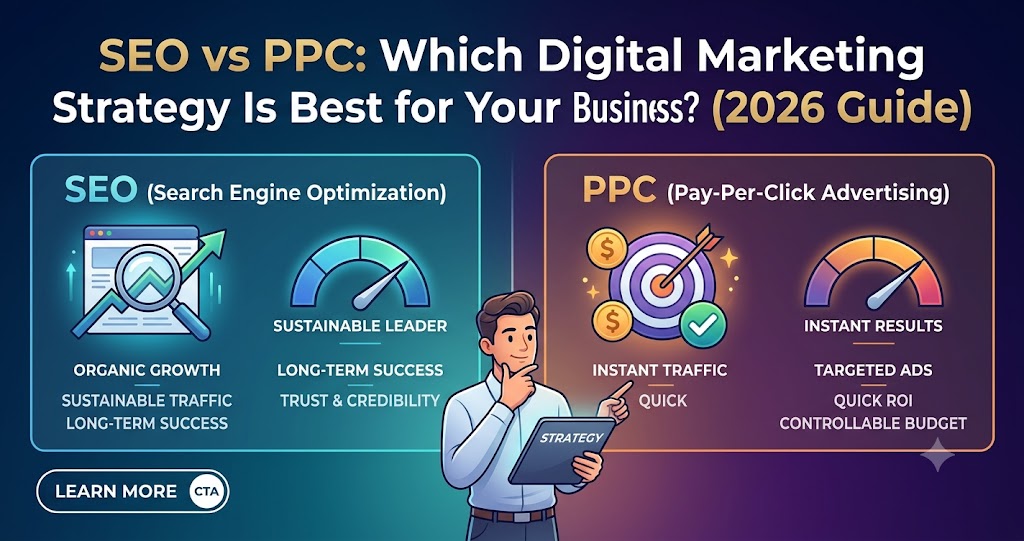
SEO vs PPC: Key Differences
| SEO | PPC |
|---|---|
| Organic traffic | Paid traffic |
| Long-term results | Immediate visibility |
| No cost per click | Pay for every click |
| Builds long-term authority | Stops when ad budget ends |
| Requires continuous optimization | Requires campaign management |
| Improves website credibility | Delivers instant leads |
Benefits of SEO
SEO is an excellent long-term investment because it helps businesses:
- Generate consistent organic traffic
- Build trust and brand authority
- Improve search engine rankings
- Deliver better user experiences
- Reduce customer acquisition costs
- Increase long-term ROI
Once your website ranks well, it can continue attracting visitors without paying for every click.
Benefits of PPC
PPC is ideal for businesses looking for quick results.
Major benefits include:
- Instant website traffic
- Fast lead generation
- Highly targeted advertising
- Flexible advertising budgets
- Easy campaign tracking
- Quick testing of products and offers
- Immediate visibility on search engines
Businesses launching new products or running limited-time campaigns often rely on PPC for faster results.
When Should You Choose SEO?
SEO is the right choice if your business wants to:
- Build long-term online visibility
- Increase organic website traffic
- Publish valuable content regularly
- Improve brand credibility
- Generate sustainable leads
- Reduce long-term marketing costs
Although SEO requires patience, it delivers lasting business value.
When Should You Choose PPC?
PPC is recommended if you:
- Need immediate website traffic
- Launch a new business or product
- Run seasonal promotions
- Want quick lead generation
- Test new markets
- Have a dedicated advertising budget
PPC works particularly well for businesses seeking fast and measurable results.
Why Combining SEO and PPC Works Best
Many successful businesses don't choose one strategy—they use both.
SEO builds long-term authority, while PPC provides immediate visibility.
Using both together helps businesses:
- Increase brand awareness
- Capture more search traffic
- Generate qualified leads
- Improve conversion rates
- Maximize marketing ROI
- Test high-performing keywords for SEO
A combined strategy creates both short-term success and long-term growth.
Common Mistakes to Avoid
SEO Mistakes
- Keyword stuffing
- Slow website speed
- Duplicate content
- Poor mobile optimization
- Ignoring technical SEO
- Low-quality backlinks
PPC Mistakes
- Targeting broad keywords
- Weak ad copy
- Poor landing pages
- Ignoring conversion tracking
- Not optimizing campaigns
- Wasting budget on irrelevant clicks
Avoiding these mistakes improves campaign performance and marketing efficiency.
Best Practices for Success
To achieve the best results:
- Build a fast, mobile-friendly website.
- Create valuable, SEO-focused content.
- Optimize every page for user intent.
- Track conversions and user behavior.
- Test PPC campaigns regularly.
- Analyze performance reports.
- Combine SEO and PPC for maximum visibility.
A balanced digital marketing strategy delivers stronger long-term results.
Digital Marketing Trends in 2026
The future of digital marketing continues to evolve with technologies such as:
- AI-powered SEO
- Predictive advertising
- Voice search optimization
- Performance Max campaigns
- AI-generated content
- Smart bidding
- Personalized search experiences
- Answer Engine Optimization (AEO)
Businesses adopting these trends gain a competitive advantage in search visibility and customer engagement.
Frequently Asked Questions (FAQ)
Which is better: SEO or PPC?
SEO is ideal for long-term organic growth, while PPC delivers immediate traffic and faster lead generation. The best choice depends on your business goals and budget.
Is SEO more affordable than PPC?
SEO requires an investment in optimization and content creation, but it doesn't charge for every visitor. PPC involves continuous advertising costs based on clicks and campaign performance.
How long does SEO take?
Most SEO campaigns begin showing noticeable improvements within three to six months, depending on competition and website quality.
Is PPC suitable for small businesses?
Yes. PPC platforms offer flexible budgets, allowing startups and small businesses to advertise effectively without large investments.
Can I use SEO and PPC together?
Absolutely. Combining SEO with PPC helps businesses achieve immediate visibility while building sustainable long-term traffic and brand authority.
Why Choose Coding Rig?
At Coding Rig, we provide complete digital marketing solutions designed to help businesses grow online. Our services include SEO, PPC campaign management, Google Ads, technical SEO, content marketing, local SEO, Answer Engine Optimization (AEO), conversion optimization, and performance analytics.
We create customized marketing strategies that improve search rankings, generate qualified leads, increase website traffic, and maximize your return on investment. Whether you're a startup or an established business, our team helps you achieve measurable digital growth.
Conclusion
SEO and PPC are both powerful digital marketing strategies, each serving a different purpose. SEO builds long-term authority, improves organic rankings, and delivers sustainable traffic, while PPC provides immediate visibility, targeted advertising, and faster lead generation.
Rather than viewing SEO and PPC as competitors, businesses should see them as complementary strategies. By combining both, you can maximize search visibility, attract high-quality leads, improve conversions, and build a strong online presence.
Choosing the right strategy depends on your goals, budget, and timeline. With the right digital marketing partner, your business can leverage SEO and PPC together to achieve long-term success in 2026 and beyond.