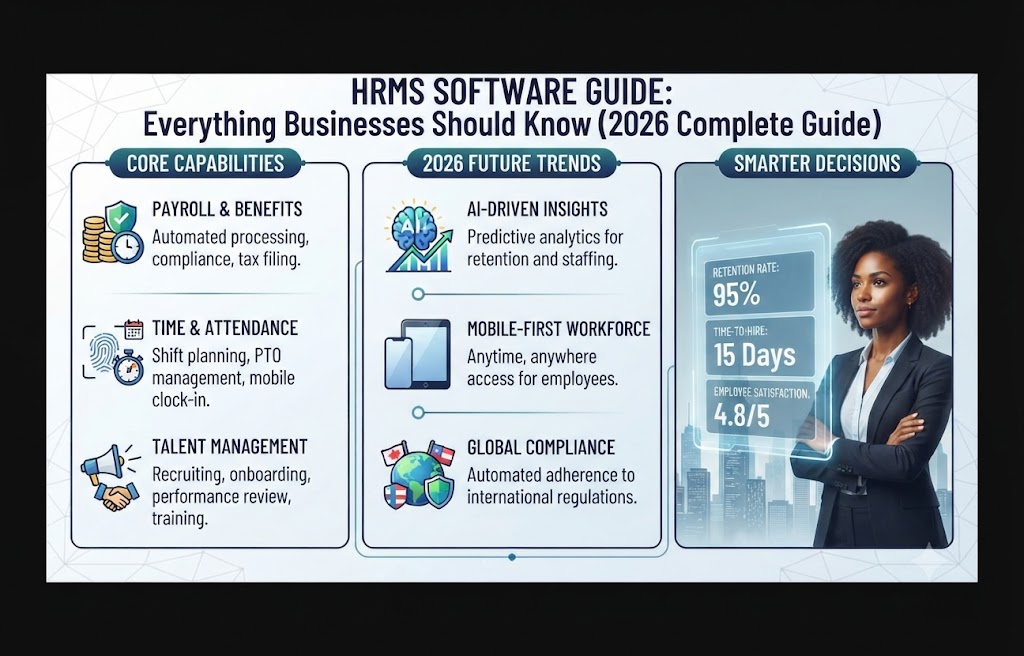
HRMS Software Guide: Everything Businesses Should Know (2026 Complete Guide)
Employees are the backbone of every successful organization, but managing a growing workforce can quickly become challenging without the right tools. From recruitment and attendance tracking to payroll processing, performance evaluations, and employee engagement, Human Resources teams handle numerous responsibilities every day. Managing these processes manually often leads to errors, delays, compliance issues, and unnecessary administrative work.
This is where Human Resource Management System (HRMS) software becomes an essential business solution. Modern HRMS platforms automate repetitive HR tasks, centralize employee information, and provide real-time insights that help organizations make informed workforce decisions.
As businesses continue embracing digital transformation in 2026, HRMS software is no longer limited to large enterprises. Startups, SMEs, educational institutions, healthcare organizations, manufacturing companies, and multinational corporations are adopting HRMS solutions to streamline operations, improve employee satisfaction, and increase organizational efficiency.
This guide explains everything businesses need to know about HRMS software, including its features, benefits, implementation strategies, and emerging trends.
What is HRMS Software?
A Human Resource Management System (HRMS) is a centralized software platform designed to manage every stage of the employee lifecycle. It combines multiple HR functions into a single system, allowing businesses to automate administrative processes while maintaining accurate employee records.
Instead of using separate tools for attendance, payroll, recruitment, leave management, and performance tracking, HRMS software integrates these functions into one secure dashboard. This improves collaboration, reduces paperwork, and provides HR teams with better visibility into workforce operations.
Modern HRMS solutions are typically cloud-based, enabling employees and managers to access information securely from any location using desktops, tablets, or mobile devices.
Why HRMS Software Matters in 2026
The workplace has changed significantly over the past few years. Hybrid work models, remote teams, digital collaboration, and increasing compliance requirements have made workforce management more complex than ever.
HRMS software helps organizations adapt to these changes by automating routine tasks, improving communication, and ensuring accurate employee data management.
Businesses using HRMS software can:
- Reduce manual HR processes
- Improve employee productivity
- Ensure payroll accuracy
- Simplify compliance management
- Enhance employee engagement
- Make data-driven HR decisions
- Improve workforce planning
- Support business growth
By replacing manual processes with automation, HR teams can focus more on strategic initiatives such as talent development and employee retention.
Key Features of HRMS Software
A modern HRMS platform includes several modules that work together to simplify human resource management.
Employee Information Management
HRMS software maintains centralized employee profiles containing personal information, employment history, documents, qualifications, emergency contacts, and organizational roles.
This eliminates scattered records and ensures information remains updated across departments.
Recruitment and Applicant Tracking
The recruitment module helps HR teams publish job openings, manage applications, schedule interviews, evaluate candidates, and streamline the hiring process from one platform.
Attendance and Leave Management
Employees can mark attendance, request leave, and track leave balances digitally. Managers receive notifications for approvals while HR gains real-time attendance reports.
Payroll Management
Payroll automation calculates salaries, bonuses, deductions, taxes, overtime, and reimbursements accurately while generating payslips and payroll reports.
Performance Management
Managers can set goals, conduct performance reviews, monitor employee progress, and provide continuous feedback that supports professional development.
Employee Self-Service Portal
Employees can update personal details, download salary slips, apply for leave, access company policies, and submit requests without relying on HR staff for every task.
Reports and Analytics
Interactive dashboards provide valuable insights into workforce performance, attendance trends, employee turnover, recruitment metrics, payroll expenses, and overall HR efficiency.
Benefits of HRMS Software
Implementing an HRMS offers significant advantages for organizations of every size.
Increased Operational Efficiency
Automation reduces repetitive administrative work, allowing HR professionals to focus on employee engagement, leadership development, and organizational strategy.
Better Employee Experience
Self-service portals, faster approvals, transparent communication, and easy access to HR services create a more positive employee experience.
Accurate Payroll Processing
Automated calculations minimize payroll errors while ensuring employees receive accurate and timely salary payments.
Improved Compliance
HRMS software helps organizations maintain compliance with labor laws, tax regulations, attendance policies, and documentation requirements.
Enhanced Data Security
Employee records are stored securely with role-based access controls, encryption, and regular backups, protecting sensitive organizational information.
Smarter Decision-Making
Real-time analytics enable business leaders to identify workforce trends, monitor performance, forecast hiring needs, and improve strategic planning.
Industries That Benefit from HRMS Software
HRMS software supports organizations across a wide range of industries.
Common users include:
- Information Technology
- Healthcare
- Manufacturing
- Education
- Retail
- Hospitality
- Logistics
- Construction
- Banking and Finance
- Government Organizations
- Consulting Firms
- Startups and SMEs
Any business managing employees can improve efficiency through HR automation.
HRMS Software vs Traditional HR Management
Traditional HR management often depends on spreadsheets, paper documents, emails, and disconnected software applications.
This approach commonly results in:
- Manual data entry
- Payroll inaccuracies
- Delayed approvals
- Lost documents
- Compliance risks
- Limited reporting capabilities
HRMS software eliminates these challenges by centralizing HR operations within a single digital platform, improving accuracy, transparency, and efficiency.
Best Practices for Implementing HRMS Software
Successful HRMS implementation begins with understanding organizational requirements.
Businesses should:
- Define HR objectives
- Select scalable software
- Migrate employee data securely
- Train HR teams and employees
- Configure user permissions
- Integrate payroll and attendance systems
- Test workflows before deployment
- Monitor system performance regularly
Proper planning ensures smooth adoption while minimizing operational disruptions.
HRMS Trends in 2026
Human resource technology continues evolving with Artificial Intelligence and automation.
Emerging HRMS trends include:
- AI-powered recruitment
- Predictive workforce analytics
- Automated onboarding
- Chatbot-based employee support
- Mobile-first HR applications
- Facial recognition attendance
- Employee wellness tracking
- Skills and competency management
- Cloud-native HR platforms
- Personalized learning and development
These innovations help organizations build smarter, more engaged, and future-ready workforces.
How Coding Rig Develops Smart HRMS Solutions
At Coding Rig, we develop customized HRMS software designed to simplify workforce management for businesses of every size. Our HRMS solutions include employee management, attendance tracking, payroll processing, leave management, recruitment, performance evaluation, document management, reporting dashboards, mobile accessibility, and role-based security.
We also integrate HRMS platforms with ERP systems, accounting software, biometric attendance devices, payroll services, CRM platforms, and business intelligence tools to create a connected digital workplace.
Every solution is built with scalability, security, and user experience in mind, enabling organizations to manage their workforce efficiently while supporting long-term business growth.
Conclusion
HRMS software has become an essential investment for organizations looking to modernize their human resource operations. By automating administrative tasks, improving payroll accuracy, enhancing employee engagement, and providing real-time workforce insights, HRMS enables businesses to operate more efficiently while creating a better employee experience.
As workplaces continue evolving in 2026, businesses that embrace intelligent HR technology will be better positioned to attract top talent, improve productivity, maintain compliance, and support sustainable growth.
Whether you're a startup managing your first employees or a large enterprise overseeing thousands of team members, implementing a modern HRMS solution is a strategic step toward building a more efficient, data-driven, and employee-focused organization.