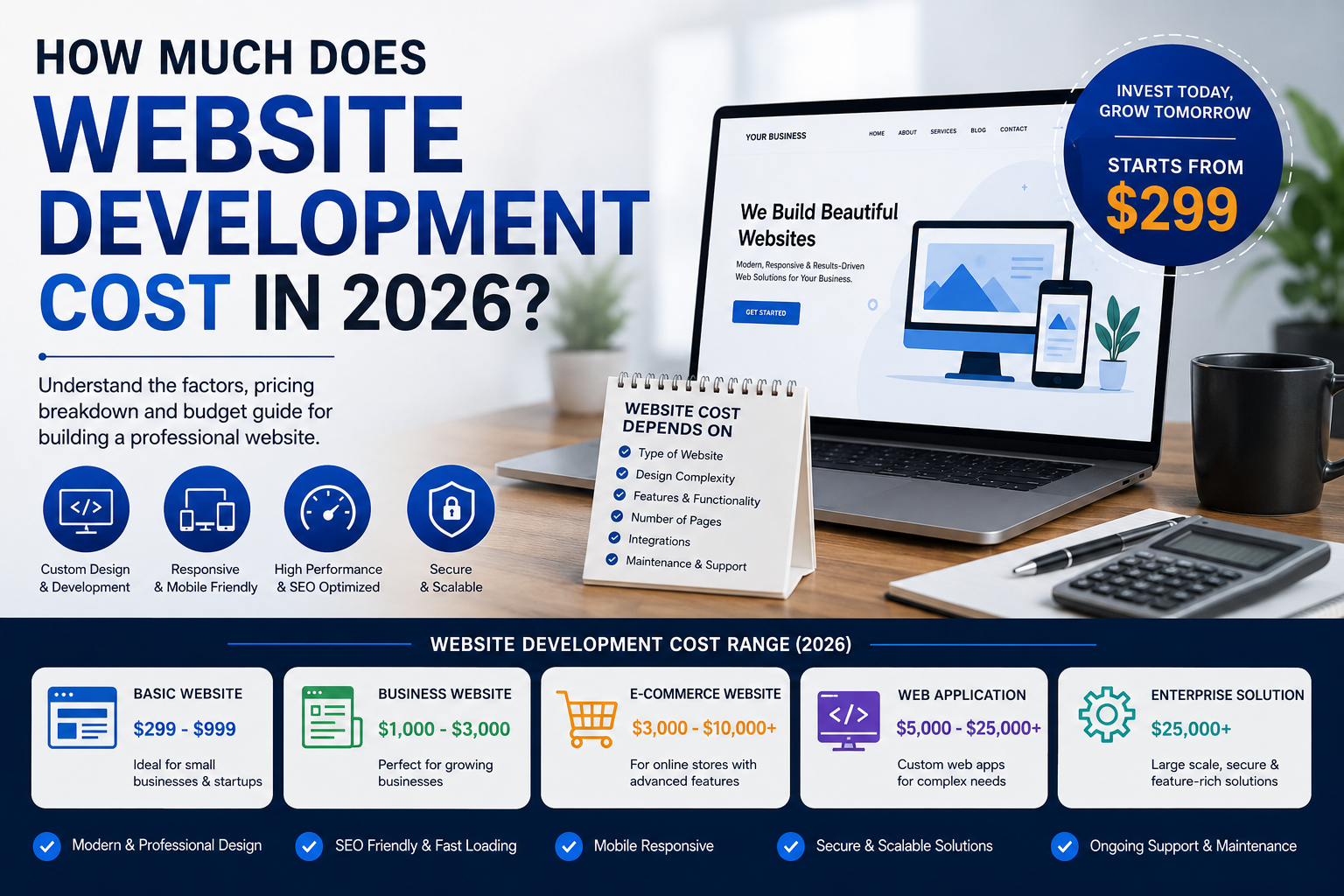
How Much Does Website Development Cost in 2026? Complete Pricing Guide
Introduction
One of the first questions every business owner asks before building a website is, "How much does website development cost?" The answer depends on several factors, including the type of website, its features, design complexity, technology stack, and ongoing maintenance requirements.
A website is more than just an online presence—it is a powerful business asset that helps generate leads, build credibility, improve customer engagement, and increase sales. Whether you're launching a startup, expanding an existing business, or creating an e-commerce platform, understanding website development costs helps you plan your investment wisely.
In this guide, we'll break down the factors that affect website pricing, typical cost ranges, and practical tips for getting the best value from your website development project.
What Determines Website Development Cost?
Website pricing varies because every project has unique business goals and technical requirements.
The most common factors include:
- Website type
- Number of pages
- Custom design requirements
- Responsive mobile design
- Features and functionality
- CMS integration
- E-commerce capabilities
- Third-party integrations
- SEO optimization
- Security requirements
- Hosting infrastructure
- Ongoing maintenance
The more customized and feature-rich your website is, the higher the development cost is likely to be.
Website Development Cost by Website Type
Business Website
A standard business website typically includes:
- Home page
- About page
- Services
- Contact page
- Blog
- Inquiry form
These websites are ideal for service providers, consultants, agencies, and local businesses.
Corporate Website
Corporate websites often require:
- Multiple departments
- Team profiles
- Careers section
- Investor information
- Advanced contact forms
- Custom integrations
These projects generally involve greater design and development complexity.
E-Commerce Website
Online stores usually include:
- Product catalog
- Shopping cart
- Secure checkout
- Payment gateway
- Inventory management
- Order tracking
- Customer accounts
The overall cost depends on the number of products and required integrations.
Custom Web Application
Businesses needing specialized functionality may require a custom web application instead of a standard website.
Examples include:
- CRM platforms
- ERP systems
- HRMS portals
- Booking systems
- Learning Management Systems
- Client dashboards
These solutions require advanced planning, development, testing, and long-term support.
Key Cost Factors
Custom Design
A professionally designed website improves user experience and strengthens your brand identity.
Custom UI/UX design generally costs more than using pre-built templates but delivers better results.
Responsive Design
Modern websites must work seamlessly across desktops, tablets, and smartphones.
Responsive design is now considered an essential requirement rather than an optional feature.
Content Management System (CMS)
Businesses often choose CMS platforms to manage content without technical knowledge.
Popular options include:
- WordPress
- Custom CMS
- Headless CMS solutions
CMS customization affects development costs.
E-Commerce Features
Online stores may require:
- Product management
- Payment gateways
- Shipping integrations
- Discount management
- Customer accounts
- Inventory synchronization
Each additional feature increases development effort.
Third-Party Integrations
Many businesses integrate websites with:
- CRM software
- ERP systems
- Email marketing tools
- Payment gateways
- Social media platforms
- Analytics tools
- Live chat
- Booking systems
The number and complexity of integrations impact pricing.
Search Engine Optimization (SEO)
A technically optimized website performs better in search engines.
SEO-friendly development includes:
- Fast loading speed
- Mobile optimization
- Clean URL structure
- Schema markup
- Metadata optimization
- Image optimization
- Secure HTTPS implementation
Investing in SEO during development can reduce future optimization costs.
Website Security
Security is essential for protecting customer information.
Common security measures include:
- SSL certificates
- Firewalls
- Secure authentication
- Data encryption
- Backup systems
- Malware protection
Business websites handling sensitive data require stronger security measures.
Website Development Process
A professional website typically follows these stages:
1. Discovery & Planning
Understand business goals, audience, and project requirements.
2. UI/UX Design
Create layouts, wireframes, and visual designs that reflect the brand.
3. Development
Develop the frontend, backend, database, and required integrations.
4. Testing
Test functionality, performance, security, responsiveness, and compatibility across devices.
5. Launch
Deploy the website to a production server after final approval.
6. Maintenance
Monitor performance, update software, fix bugs, and improve security regularly.
Ongoing Website Costs
Website development is not a one-time expense.
Businesses should also plan for:
- Domain renewal
- Web hosting
- SSL certificates
- Software updates
- Security monitoring
- Content updates
- SEO improvements
- Technical support
- Performance optimization
Regular maintenance helps keep the website secure and competitive.
How to Reduce Website Development Costs
Businesses can optimize their investment by:
- Clearly defining project requirements.
- Prioritizing essential features.
- Building an MVP before adding advanced functionality.
- Using scalable technologies.
- Choosing experienced developers.
- Planning future integrations during the initial development phase.
Avoid focusing only on the lowest price—quality, scalability, and long-term support often provide better value.
Common Mistakes When Budgeting
Many businesses underestimate website costs by overlooking:
- Content creation
- SEO
- Mobile optimization
- Security
- Maintenance
- Third-party licenses
- Future feature expansion
Considering the full lifecycle of the website leads to more accurate budgeting.
How to Choose the Right Website Development Company
When selecting a development partner, consider:
- Portfolio and experience
- Technical expertise
- Industry knowledge
- Communication process
- Project management approach
- Client reviews
- Support services
- Scalability
- Security practices
A reliable development company focuses on delivering long-term business value rather than just launching a website.
Website Development Trends in 2026
Modern websites increasingly include:
- AI-powered chatbots
- Personalized user experiences
- Progressive Web Apps (PWAs)
- Voice search optimization
- Advanced cybersecurity
- Cloud hosting
- Headless CMS architecture
- Interactive user interfaces
- AI-generated content assistance
Businesses adopting these technologies gain a competitive advantage and improve customer satisfaction.
Frequently Asked Questions (AEO)
How much does website development cost in 2026?
Website development costs vary depending on the project's size, design, functionality, integrations, and customization requirements. Basic business websites generally cost less than custom web applications or e-commerce platforms.
Why do website development costs vary so much?
Every business has different requirements. Factors such as custom design, advanced features, integrations, SEO, security, and ongoing maintenance all influence the final cost.
Is a custom website worth the investment?
Yes. A custom website is designed around your business goals, brand identity, and customer needs, providing better performance, scalability, and flexibility than generic templates.
Does website development include SEO?
Many professional development companies include technical SEO during development. However, ongoing SEO services such as content optimization and link building are usually separate.
How long does website development take?
The timeline depends on project complexity. Simple websites may take a few weeks, while complex e-commerce platforms or custom web applications can take several months.
Can I upgrade my website later?
Yes. A professionally developed website should be scalable, allowing new features, integrations, and functionality to be added as your business grows.
Conclusion
Website development is an investment in your business's digital future. While costs vary based on design, functionality, integrations, and long-term goals, a professionally built website can improve brand credibility, attract new customers, and support sustainable growth.
Rather than choosing the cheapest option, focus on building a secure, scalable, and SEO-friendly website that delivers long-term value.
At CodingRig, we specialize in creating custom websites, e-commerce platforms, and web applications tailored to your business needs. From planning and UI/UX design to development, SEO optimization, and ongoing maintenance, our team delivers modern, high-performance websites designed to help your business succeed in 2026 and beyond.