App Development Lifecycle: A Complete Guide to Building High-Performance Mobile Applications
Mobile applications have become essential for businesses looking to improve customer engagement, streamline operations, and expand their digital presence. However, creating a successful app involves much more than writing code. It requires careful planning, user-focused design, quality development, rigorous testing, and continuous improvements after launch.
A structured app development lifecycle helps businesses build secure, scalable, and high-performing mobile applications that deliver real value. Whether you're creating an Android app, an iOS app, or a cross-platform solution, following a well-defined development process significantly increases the chances of success.
What Is the App Development Lifecycle?
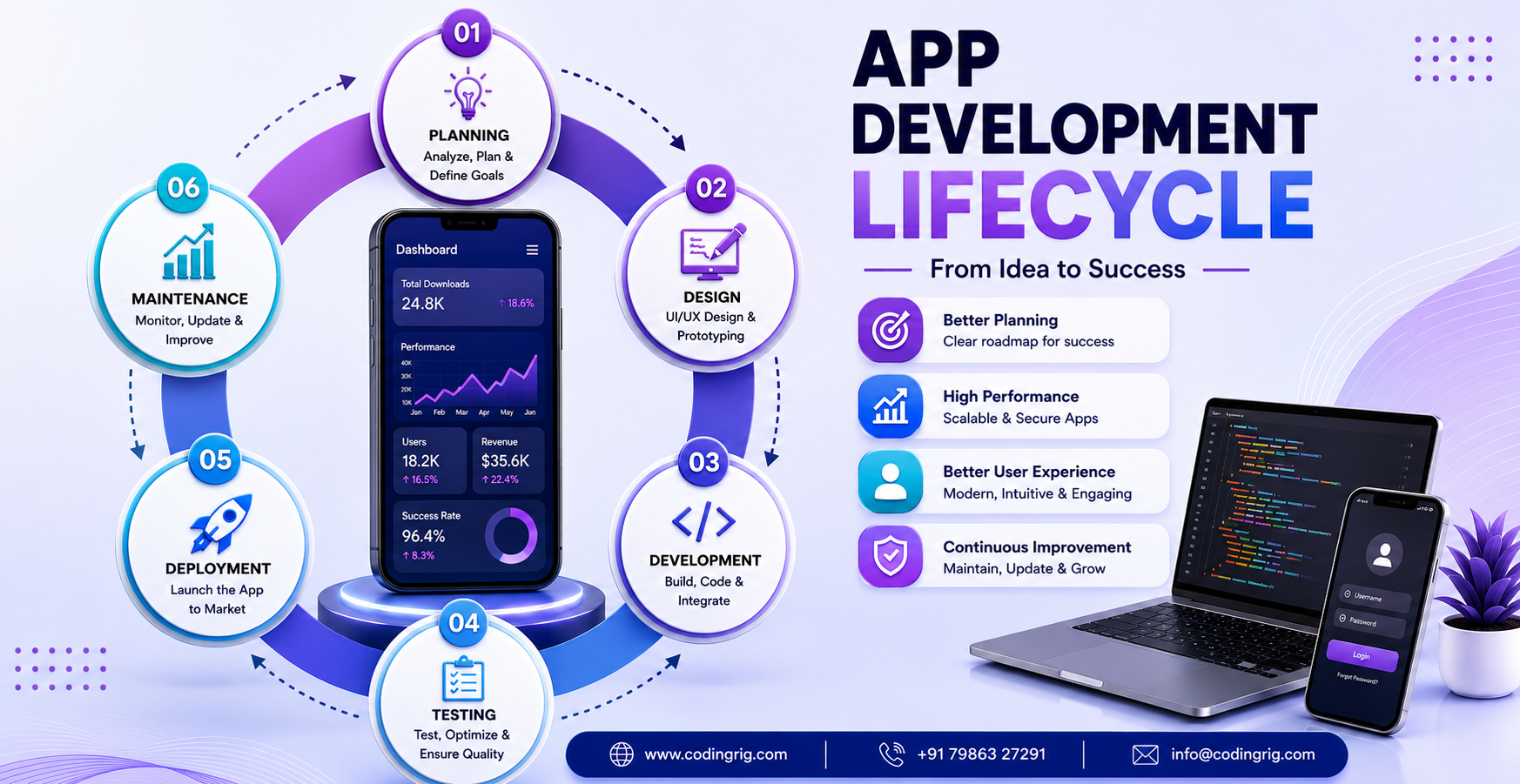
The app development lifecycle is the step-by-step process of designing, developing, testing, launching, and maintaining a mobile application. Each stage has a specific purpose and contributes to building a reliable product that meets business goals and user expectations.
Following a structured lifecycle reduces development risks, improves collaboration, and ensures that every feature is carefully planned before deployment.
Stage 1: Idea Validation and Planning
Every successful application starts with a clear objective. Before development begins, businesses should identify the problem the app will solve, understand the target audience, and define the features users actually need.
During this phase, teams perform market research, competitor analysis, and requirement gathering. Establishing a realistic timeline and budget also helps prevent delays later in the project.
Stage 2: UI/UX Design
An attractive and intuitive interface plays a major role in user satisfaction. Designers create wireframes, user flows, and interactive prototypes that visualize the application's structure before coding begins.
Good UI/UX design focuses on:
-
Simple navigation
-
Consistent layouts
-
Responsive interfaces
-
Accessibility
-
Fast user interactions
A well-designed application encourages users to stay engaged and improves long-term retention.
Stage 3: Application Development
Once the design is approved, developers begin building the application. This stage includes frontend development, backend development, database creation, API integration, authentication, and business logic implementation.
Depending on project requirements, businesses may choose native development for Android and iOS or cross-platform frameworks such as React Native to reduce development time and costs.
Clean, scalable, and secure coding practices ensure the application remains reliable as it grows.
Stage 4: Testing and Quality Assurance
Before launching an application, it must be tested thoroughly to ensure stability and performance.
Testing typically includes:
-
Functional testing
-
Performance testing
-
Security testing
-
Compatibility testing
-
User interface testing
-
Bug fixing
Comprehensive testing helps identify issues early, reducing the risk of problems after release.
Stage 5: Deployment
After successful testing, the application is prepared for launch on platforms such as the Google Play Store and Apple App Store.
This phase includes application packaging, store optimization, compliance checks, screenshots, descriptions, and final approvals.
A smooth deployment process ensures users can download and start using the application without issues.
Stage 6: Maintenance and Continuous Improvement
Launching an app is only the beginning. Regular updates keep the application secure, compatible with new operating systems, and aligned with changing user expectations.
Ongoing maintenance includes:
-
Bug fixes
-
Performance improvements
-
Security updates
-
Feature enhancements
-
User feedback implementation
-
Analytics monitoring
Continuous improvements help businesses maintain customer satisfaction and remain competitive.
Best Practices for Successful App Development
To maximize the chances of success, businesses should follow proven development practices:
-
Define clear business objectives.
-
Prioritize user experience.
-
Build scalable architecture.
-
Protect user data with strong security.
-
Optimize application performance.
-
Test on multiple devices.
-
Monitor analytics after launch.
-
Continuously update the application.
Following these principles results in a reliable, future-ready mobile application.
Why the Development Lifecycle Matters
A structured lifecycle provides several advantages:
-
Faster project execution
-
Better collaboration
-
Lower development risks
-
Improved software quality
-
Higher customer satisfaction
-
Easier maintenance
-
Better return on investment
Businesses that follow a systematic development process are more likely to deliver successful mobile applications that meet user expectations.
Why Choose Coding Rig?
At Coding Rig, we follow a proven app development lifecycle that transforms ideas into powerful mobile applications. From business analysis and UI/UX design to development, testing, deployment, and ongoing support, our team delivers complete end-to-end mobile app solutions.
Whether you need an Android app, iOS app, React Native application, eCommerce platform, CRM, ERP solution, healthcare app, or custom business software, we build secure, scalable, and high-performance applications designed for long-term growth.
Conclusion
Developing a successful mobile application requires careful planning, modern technology, and a structured development process. By following every stage of the app development lifecycle—from idea validation to long-term maintenance—businesses can reduce risks, improve user satisfaction, and achieve better business outcomes.
Investing in a well-planned development process ensures your application remains reliable, secure, and ready to grow alongside your business in 2026 and beyond.